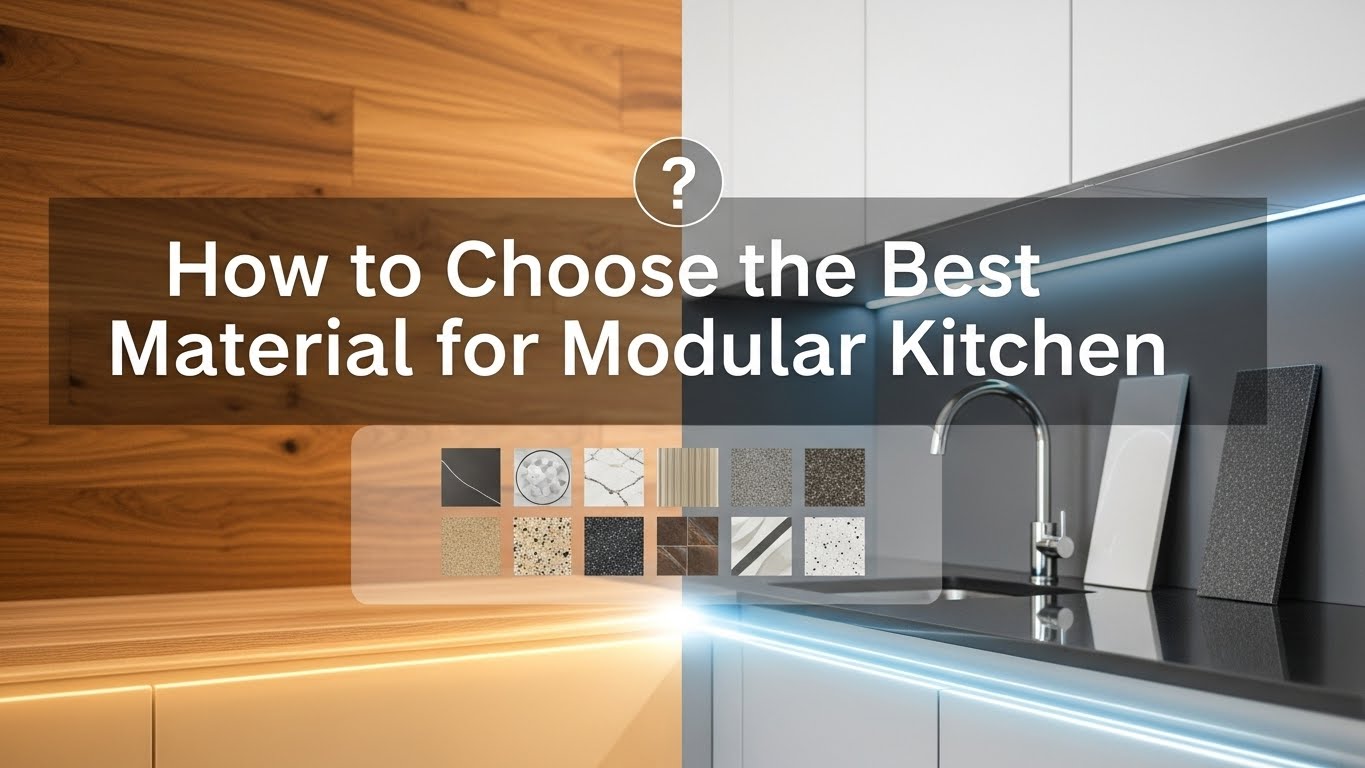
Confused between plywood, MDF, HDF, laminates, acrylic, and granite? Here’s how to choose the best material for a modular kitchen based on budget, durability, maintenance, and finish.
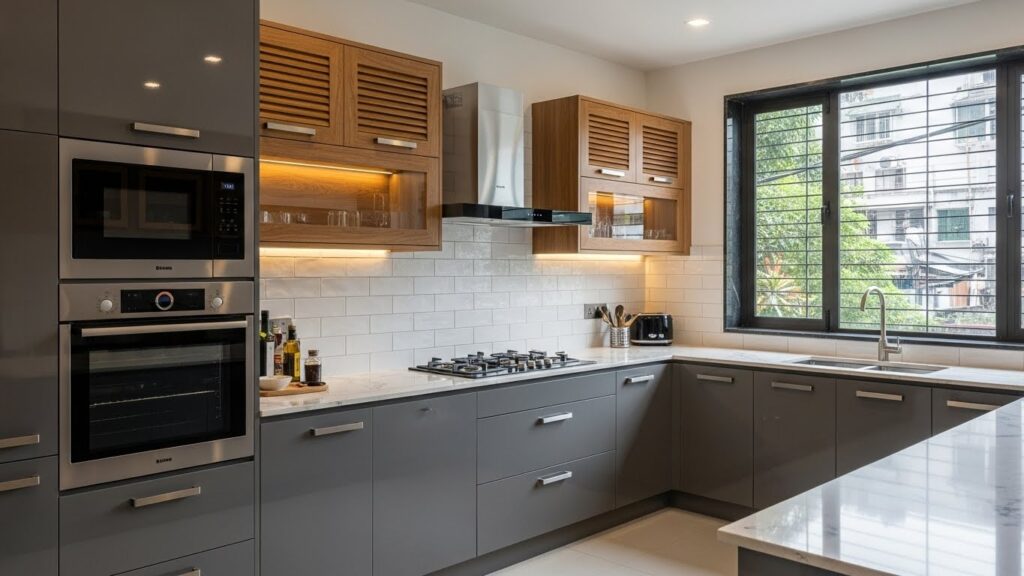
Choosing a modular kitchen is fun… until you reach the “materials” stage and suddenly everyone is throwing terms at you like plywood, MDF, HDF, BWP, acrylic, laminate, membrane, granite and you’re like: “I just want a kitchen that looks good and lasts.”
You’re not alone.
In fact, most homeowners planning a modular kitchen in Kolkata face this exact confusion, especially because our climate, cooking habits, and daily usage demand smarter material choices, not just good looks.
The best part?
You don’t need to become a materials expert. You just need to know what to choose based on:
- your cooking style
- your budget
- your maintenance comfort
- your humidity and usage
- and what you want your kitchen to look like
This blog breaks down how to choose the best material for a modular kitchen in a super simple, practical way, like a friend guiding you, not a brochure.
It also helps you understand why the modular kitchen price in Kolkata can vary so much. Spoiler alert: materials play a huge role in deciding long-term durability and cost, not just the initial quote.
First, What “Materials” Are We Actually Talking About?
In a modular kitchen, materials show up in different areas, and each area needs a different kind of strength and finish. This is where experienced modular kitchen manufacturers in Kolkata think differently from generic sellers, they choose materials based on function, not trends.
Here’s how materials are used:
- Carcass (inside box of cabinets – the “skeleton”)
- Shutters (the visible doors/drawers – the “face”)
- Countertop (working surface – the “workhorse”)
- Hardware (hinges, channels, handles – the “daily-use hero”)
- Backsplash + finishes (the “easy-to-clean zone”)
So when someone says “best material for modular kitchen”, always ask:
👉 Best for which part?
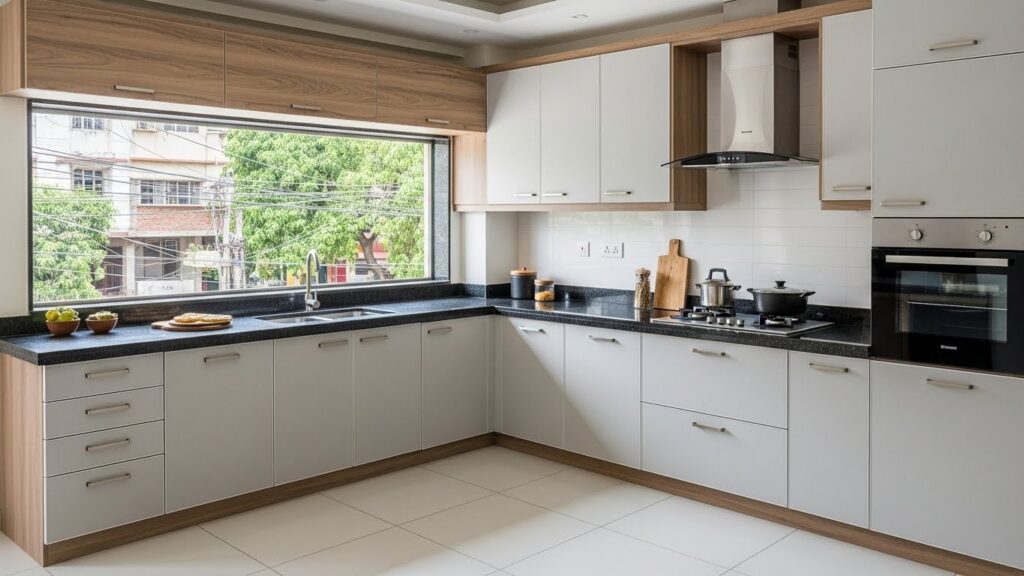
Step 1: Pick the Right Core Material (Carcass + Cabinet Body)
Your carcass is where durability lives. If this is weak, even the prettiest shutters won’t save the kitchen long-term.
1) Plywood (Most Trusted for Indian Kitchens)
Plywood is the most commonly recommended core material because it handles load and daily use well.
Why homeowners like it:
- strong and durable
- handles screws/hinges better
- good for heavy storage (utensils, appliances)
Best for: kitchens with daily heavy cooking + long-term use.
Tip: For Kolkata’s humidity, choose good-grade plywood and ensure edge-banding + proper lamination.
2) MDF (Smooth Finish, Budget-Friendly)
MDF is popular when you want a very smooth finish, especially for painted or membrane shutters.
Good points:
- smooth surface (great for certain finishes)
- economical compared to plywood
- works well for decorative shutters
But remember:
- not great with water exposure
- can swell if moisture enters
Best for: dry zones, low-moisture kitchens, or for shutters with proper finishing – less ideal for carcass in wet areas.
3) HDF / HDHMR (Better for Moisture Than MDF, Great for Shutters)
HDHMR (often used in modular kitchens) is denser and more moisture-resistant than standard MDF.
Why it’s chosen:
- better moisture performance than MDF
- strong, stable
- works well for modern shutter finishes
Best for: shutters, especially if you want premium finish with decent moisture resistance.
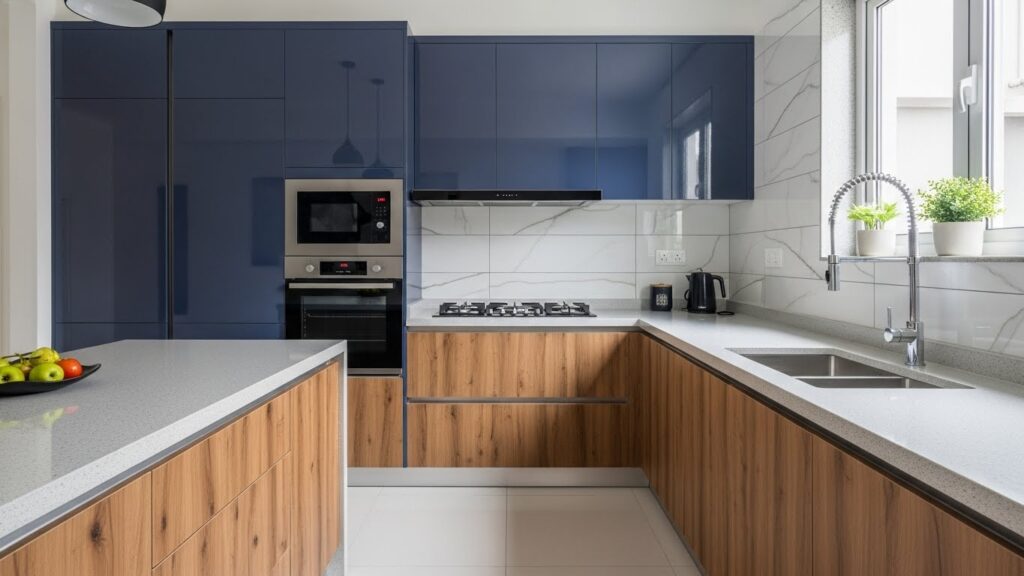
Step 2: Choose the Best Shutter Material + Finish (This Defines the Look)
Shutters are what you see every day – so this is where aesthetics matter. But it still needs practicality because kitchens are messy.
1) Laminate Shutters (Most Practical + Most Value)
Laminate is the “safe and smart” choice for most Indian homes.
Why it’s loved:
- budget-friendly
- easy to maintain
- comes in many designs (wood, matte, glossy, texture)
- resists stains better than many premium finishes
Best for: families who cook daily and want a stylish yet low-maintenance kitchen that stands up well over time thanks to strong laminate maintenance and durability.
2) Acrylic Shutters (Glossy, Modern, Premium Look)
Acrylic gives that sleek, reflective, “showroom” look – very popular in modern modular kitchens.
Pros:
- high-gloss finish looks premium
- smooth and stylish
- great for modern, clean designs
Cons:
- fingerprints show easily
- scratches can be visible
- costs more than laminate
Best for: homeowners who love glossy, modern kitchens and are comfortable with regular wiping and care, which is part of typical acrylic kitchen finish characteristics.
3) Membrane / PVC Wrap (Seamless Look, But Choose Carefully)
Membrane shutters are made by vacuum pressing a PVC film on MDF.
Pros:
- seamless edges
- available in many designs
- good for classic and modern styles
Cons:
- not ideal near high heat (like next to hob)
- may peel over time if quality is low
Best for: kitchens with controlled heat zones and good ventilation, or areas away from direct heat.
4) PU Paint (Luxury Look, Highest Customisation)
PU painted shutters look like a luxury kitchen because the finish is smooth and premium.
Pros:
- rich look, highly customisable colours
- works beautifully in contemporary designs
Cons:
- expensive
- can chip if hit hard
- needs careful maintenance
Best for: premium projects where finish and design are top priority.
Read more: 12 Things to Remember While Making a Modular Kitchen
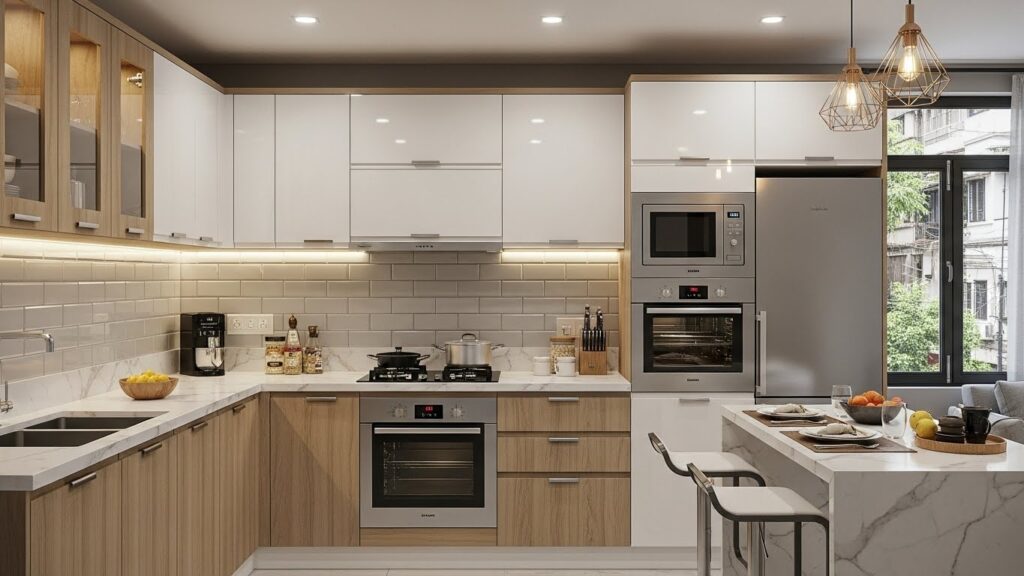
Step 3: Countertop Material (Your Kitchen’s Workhorse)
Your countertop needs to survive heat, chopping, spills, stains, and daily wear.
1) Granite (Most Popular and Durable)
Granite is still one of the best countertop options for Indian kitchens.
Why it works:
- durable and heat-resistant
- handles daily cooking well
- good lifespan
Best for: heavy cooking households and long-term durability.
2) Quartz (Premium, Uniform, Easy Look)
Quartz looks sleek and has a uniform finish.
Pros:
- clean, premium look
- less porous than many stones
- consistent pattern
Cons:
- can be more expensive
- heat resistance depends – use trivets to be safe
Best for: premium kitchens with a modern aesthetic.
3) Laminate Countertops (Budget-Friendly, Needs Care)
These can work for budget kitchens but require caution.
Pros:
- affordable
- lots of designs
Cons:
- not great with heat
- can swell if water gets into joints
Best for: low-budget kitchen setups where careful use is possible.

Step 4: Hardware Matters (Even If Nobody Talks About It)
The best material won’t feel “best” if your drawers jam or hinges sag.
Invest in:
- soft-close hinges
- heavy-duty channels for drawers
- good corner units and pull-outs
This is where the importance of kitchen hardware quality really shows – it improves day-to-day comfort massively and significantly increases the kitchen’s lifespan.
Step 5: Think About Maintenance (Because Real Life Happens)
Ask yourself honestly:
- Do I want a kitchen that stays good with basic cleaning?
- Or am I okay doing frequent wiping and careful handling?
If you want low maintenance:
- laminate shutters
- granite countertops
- matte textures that hide smudges
- darker mid-tones that don’t show stains quickly
If you want premium look and don’t mind upkeep:
- acrylic / PU finishes
- quartz countertops
- lighter glossy palettes
Step 6: Choose Based on Your Budget (Smart Combos That Work)
Here are practical “best material” combinations based on common budgets:
Budget-Friendly Modular Kitchen
- Carcass: good quality plywood (or moisture-resistant board where possible)
- Shutters: laminate
- Countertop: granite
This combo gives durability + easy maintenance without overspending.
Mid-Range “Premium Look” Kitchen
- Carcass: plywood
- Shutters: acrylic (or mix of acrylic + laminate)
- Countertop: granite or quartz depending on budget
Best for homeowners who want modern aesthetics with practical performance.
Premium Modular Kitchen
- Carcass: high-grade plywood
- Shutters: PU paint or high-end acrylic
- Countertop: quartz
This delivers the most luxury look, but requires more careful maintenance and higher budget.
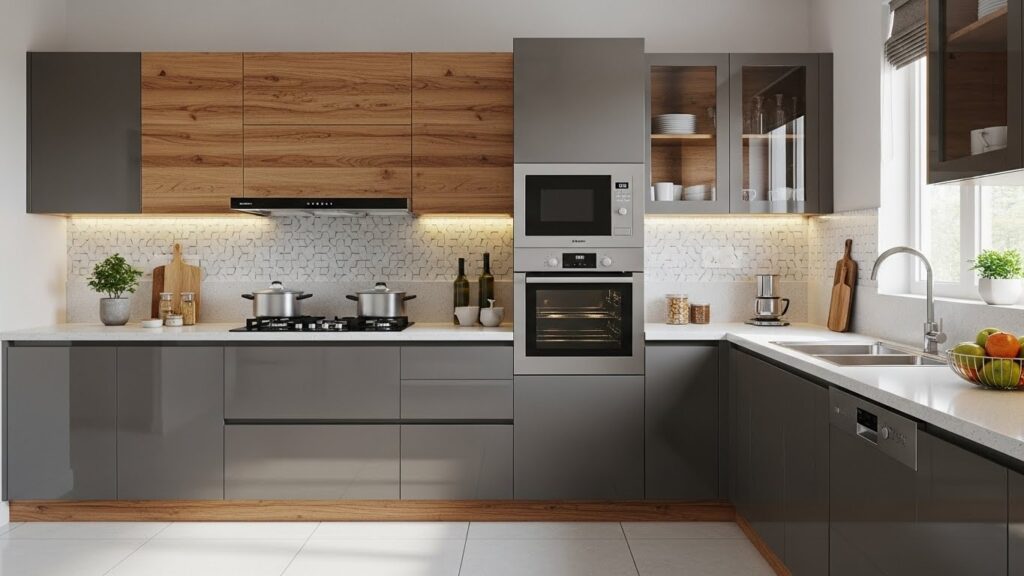
Quick Checklist: How to Decide the Best Material for Modular Kitchen
Before finalising, ask:
- Is my kitchen humid (Kolkata weather)?
- Do I cook heavy Indian food daily?
- Do I want low-maintenance or premium finish?
- What’s the budget range and where should I spend more?
- Are wet areas (sink zone) protected properly?
- Is ventilation strong enough (chimney + exhaust) to ensure proper kitchen ventilation?
This makes your decision practical, not just aesthetic.
Common Mistakes to Avoid While Choosing Materials
- choosing glossy finishes without considering fingerprints
- selecting MDF in high-moisture areas without protection
- spending too much on shutters but compromising on hardware
- ignoring heat zones near hob/chimney
- selecting light colours in heavy-cooking homes without planning cleaning
A good kitchen is not just pretty – it’s usable.
Final Thoughts: The Best Material Is the One That Matches Your Lifestyle
The “best” modular kitchen material isn’t the most expensive one. It’s the one that:
- suits your daily usage
- fits your maintenance habits
- handles your environment
- gives you the look you want
- lasts long without frequent repairs
If you want a kitchen that feels premium and practical, focus on the right combination – not just one material.
Want Help Choosing the Best Material for Your Modular Kitchen?
At Custom Design Interiors Pvt Ltd (CDI), a trusted interior decoration company in Kolkata, we guide you with clear options – what works for your budget, your cooking style, and your home’s conditions – so you don’t overspend or regret later.
Call/WhatsApp: +91 84203 69659
Email: info@customdesigninteriors-pvtltd.com
Tell us your kitchen size + budget + style preference, and we’ll suggest the best material combo that fits you perfectly. 🍳🏡✨